
ZOFEMAT: What Your Deed Does NOT Transfer Facing the Sea
You buy "beachfront" and the beach strip doesn't appear in your title. The concession that uses it doesn't transfer automatically with the unit. This is what you must demand before signing.
 Felipe LuksicDirector Comercial | Commercial Director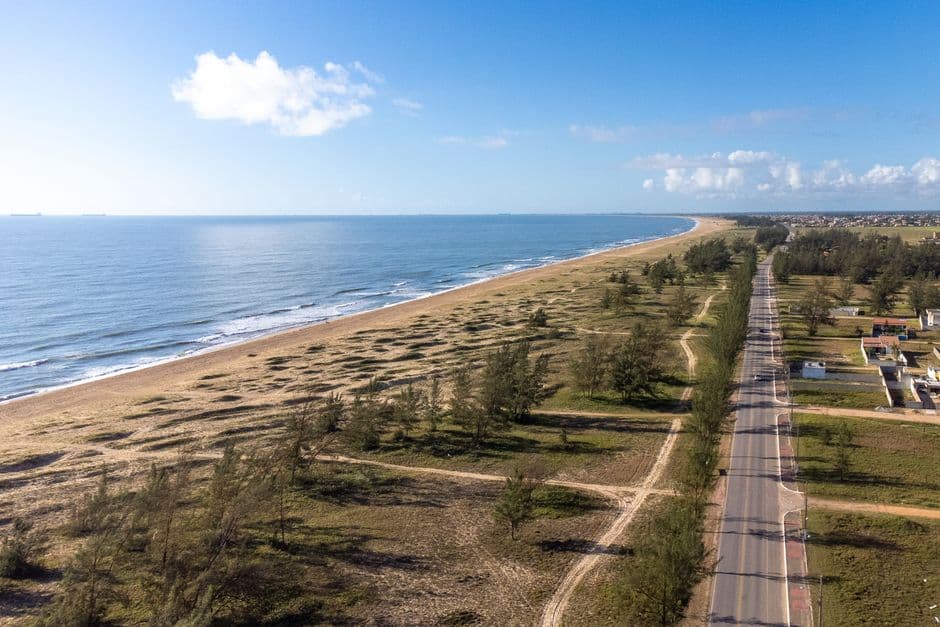
When someone sells you "beachfront," it's worth separating two things that commercial discourse fuses: the unit that does get deeded and the sandy and firm land strip next to the beach, which doesn't. That strip—the federal maritime-terrestrial zone, ZOFEMAT—is federal public domain property. No deed transfers it. Using it depends on a concession, and that concession doesn't automatically come with the sale: ceding it is an act that federal authorities must authorize. Here's what to demand before signing.
What exactly is the federal maritime-terrestrial zone?
It is the 20-meter-wide strip of firm, walkable land contiguous to the beach, according to article 119, section I, of the General Law of National Property. Along with beaches, it is federal public domain property: inalienable, non-prescriptible, and non-attachable (LGBN arts. 7, secs. IV and V, and 13). Beach and ZOFEMAT are not synonymous: they are two distinct sections of article 7, with their own definitions. If you want details on what you buy in each case, see the difference between beachfront and beach access.
The practical consequence: your deed for the adjoining lot ends where the ZOFEMAT begins. That's why the strip doesn't appear in your title, even if the view faces the sea.
Is the beach in front of my apartment mine if I buy beachfront?
No. The beach and the 20 federal meters are not sold or deeded to anyone: they are public domain. The concept of "private beach" doesn't exist in these terms; what exists is the right to use the strip, and that right comes from a concession granted by the federal Department, not from the property sale.
This matters because the premium you pay for "beachfront" rests on an assumption almost no one verifies: that someone—the development, the condominium—legally controls that strip. Before accepting the assumption, ask for the title.
Is the concession the same as the trust through which I buy on the coast?
No, and confusing them is a fundamental error: they address different questions. The ZOFEMAT concession is an administrative act of federal authorities that permits using the strip (ZOFEMAT Regulations, arts. 5 and 25); it does not transfer ownership and does not create real property rights (LGBN art. 16). It only gives the right to use before the administration. The trust through which a foreigner acquires in the 50 km zone addresses a different constitutional restriction: property ownership for foreigners in restricted zones. A properly constituted trust does not give you the ZOFEMAT, and a concession does not replace the trust.
The concession lasts up to 50 years (LGBN art. 73) and has a limited renewal window: between 1 year and 45 calendar days before expiration (Regulations art. 30). The adjoining owner may request the concession, but in fifth place of priority and only "when, under equal circumstances, there are interested private parties" (Regulations art. 24, preamble and sec. V). It is not a permanent line that reserves your place.
If I buy the unit, does the ZOFEMAT concession transfer to my name?
It does not transfer automatically. The concession does not automatically accompany the deed: its assignment is an act that the Department must authorize, not an effect of the sale. Article 37 of the ZOFEMAT Regulations states it in full:
"The assignment of rights and obligations derived from the concessions referred to in this Regulation may be authorized by the Department, provided that the following requirements are met: I. That the assignor is current in the payment of the rights designated in the concession granted; II. That the assignor has complied with the obligations designated in the concession granted; III. That the assignee meets the same requirements that were considered for the granting of the respective concession; for this purpose, companies belonging to the same group or being subsidiaries shall be understood to meet the same requirements; IV. That the federal maritime-terrestrial zone, land reclaimed from the sea or any other deposit of maritime waters that are concessions, are not subject to administrative or judicial resolution; and V. That the continuity of use, operation or exploitation for which the area was concessions, is consistent with the determinations of the master program for control and exploitation of the federal zone."
Read section III carefully: there is an exception. When the assignee is a company from the same group or a subsidiary of the title holder, it is understood that it meets the granting requirements. This speeds up internal transfers between developer subsidiary companies, not an assignment to you as an individual buyer.
The title may be in the name of the developer, the condominium regime, a third party, or nobody. That's why the only correct question at closing is: In whose name is the concession title, and was the assignment already authorized by the Department or just promised? A promise of assignment is not an authorized assignment. Note on Regulation citations: its 1991 text refers to the "Department" as the Department of Urban Development and Ecology (SEDUE, art. 2, sec. II); today jurisdiction belongs to SEMARNAT, because article 32 Bis, section VIII, of the Organic Law of Federal Public Administration grants it "Exercise of possession and property of the nation in beaches, federal maritime-terrestrial zone and land reclaimed from the sea".
How do I verify if a development has a valid ZOFEMAT concession?
Start with the register of occupants that the Regulations require the authority to prepare. Article 16 lists seven data points that register must record:
"The Department shall prepare the register of occupants of the federal maritime-terrestrial zone, land reclaimed from the sea or any other deposit of maritime waters. Said register shall include the following data: I. Name, designation or company name of the recipients, concessionaires and permit holders; II. Area and location of the territory in question, specifying municipality, state and country; III. Use, operation or exploitation, purpose of the assignment, concession or permit; IV. Approved works or existing works; V. Term of the concession or permit; VI. Authorizations granted under the terms of this Regulation; and VII. Name, designation or company name of irregular occupants, as well as occupied area and, where applicable, existing works."
Part of that information is in the SEMARNAT open data query of ZOFEMAT resolutions. The monthly listings from DGZFMTAC show state, municipality, case number, company name, area, use, term and the resolution number, formatted as DGZF-###/YY (for example, DGZF-051/20). To search your case, enter the listing and filter by your municipality; keep in mind that Puerto Morelos—a municipality since 2016—is still filed under Benito Juárez in SEMARNAT's delimitations.
The warning that changes everything: that public series is frozen. The last listing of resolutions is from November 2020 and the folder has not been updated since early 2021. It serves to disprove a fabricated title from before that date, not to confirm a recent one. If your development's concession is after 2020, it will not appear there, and its absence does not prove it doesn't exist. The only path then is to demand the title from the developer and check the DGZF-###/YY folio against the document. Also remember that concessions over federal property are recorded in the Federal Property Registry, according to article 42, section VI, of the LGBN, which lists "VI.- Concessions over federal property;".
The federal Department grants and registers the concession, through the DGZFMTAC; the municipality participates by agreement for collection, but does not grant the title. This framework gives you a complete map of the topic in the complete guide to beachfront property.
A risk worth naming
Paying a premium for "beachfront" without demanding the concession title—with holder, area, authorized use and expiration—can mean overpaying for access you don't legally control. The public query won't save you: it only publishes resolutions through 2020. This analysis is not for the buyer seeking only a sea view and indifferent to who controls the strip; it is for the investor who needs to know what asset backs the price.
Frequently asked questions
What happens to the concession if it expires and is not renewed?
Renewal is requested in a limited window: between 1 year and 45 calendar days before expiration, with the same area, same use and same title holder (ZOFEMAT Regulations, art. 30). Watch out for a common misunderstanding: continuing to occupy the area and paying the rights after expiration does not equal concession renewal (art. 30, last paragraph). Without timely renewal, your legal position regarding the strip weakens.
Does the municipality grant the ZOFEMAT concession?
No. The federal Department grants the concession—SEMARNAT, through DGZFMTAC—not the municipality (ZOFEMAT Regulations, arts. 5 and 25). The municipality may participate by agreement and for collection of rights, but does not issue the title. If someone offers you a "municipal concession" of the federal strip, that designation does not match what the law describes and it's worth asking for the original document.
Informational content; does not substitute professional advice. Reviewed by Jorge Alonso, real estate attorney. Content current as of 31-08-2026.
Before signing, review the title
If you are evaluating a beachfront property, schedule a review with a Propyte advisor: we help you request the concession title, verify in whose name it is and confirm whether the assignment was authorized. It's the step that separates a sea view from a right you can defend.
This article is part of our guide How to invest in Mexican real estate.


