Foreign buyer and federal zone concession: what your trust doesn't give you
The trust lets you use your property in restricted zones, but the federal maritime strip has its own title. What the deed transfers and what it doesn't.
 Felipe LuksicDirector Comercial | Commercial Director
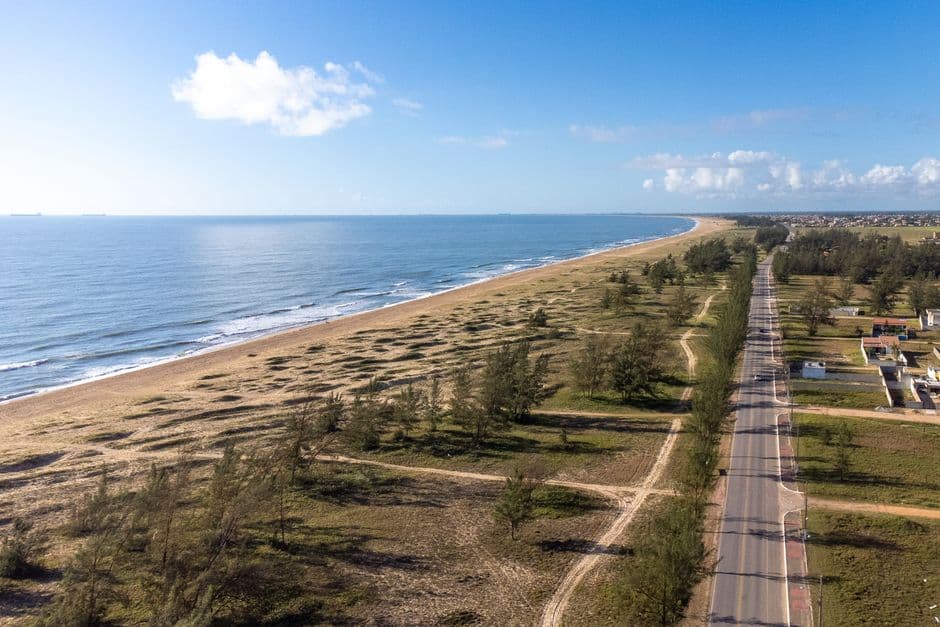
Buying beachfront and believing the beach is part of the deal is the costliest mistake in coastal real estate. The federal maritime terrestrial zone—the 20-meter strip adjacent to the beach—is public property of the Federation: nobody owns it, neither you nor the developer. What can exist over it is a concession, a title separate from your deed and your trust, with its own owner, its own expiration, and its own file.
Why can't the federal zone belong to anyone, not you or the developer?
Because the law places it under a regime that excludes private ownership. The federal maritime terrestrial zone is a common-use asset (Federal Law on National Assets, art. 7 sec. V), and common-use assets are subject to the Federation's public domain regime (art. 6 sec. II). On those assets, art. 13 is emphatic: they are "inalienable, non-prescriptible, non-attachable and shall not be subject to any replevin, possession claim whether definitive or provisional, or any other action by third parties". The half that the market never quotes is that last part: no possession converts into a right over time. Occupying the strip for years creates nothing in your favor.
Beach and federal zone are not the same, although they're used synonymously. The beach is defined by section IV of art. 7—the land that the tide covers and uncovers—; the federal zone is section V, and its 20-meter width is in art. 119 sec. I. They are two separate sections of the same law.
And since the strip belongs to no one, it also can't be closed off. Art. 8, third paragraph of the Federal Law on National Assets states that "access to maritime beaches and the federal maritime terrestrial zone adjacent to them cannot be inhibited, restricted, obstructed, or conditioned except in cases established by regulation". The law penalizes whoever prevents it and, in case of repeat offense, revokes the concession. If a sales plan includes the beach or the 20 meters within your polygon, the plan is incorrect: that cannot be sold.
What exactly does the deed transmit to me?
The deed transmits the property that does allow private ownership—your land, your apartment, your condominium unit—not the adjacent federal strip. Confirming where your polygon ends and where the federal zone begins is part of the review before signing. Ask your advisor for the boundary survey and official plan, not the commercial rendering.
If you're a foreigner, can you be a federal zone concession holder?
The operative answer comes from the authority and your attorney, not an article, and here's why. The Federal Zone (ZOFEMAT) Regulation, art. 28 expressly states that foreign individuals or entities, to be concessionaires, "must comply with the requirements established by the Law to Promote Mexican Investment and Regulate Foreign Investment and its Regulation". The problem: that law is repealed. The SECOND transitional clause, section I of the Foreign Investment Law repealed it, and the FIL was published December 27, 1993. The reference hung pointing to a law that no longer exists, which is why nobody gives a clear answer.
What can be said with certainty is negative in both directions. The ZOFEMAT concession does not appear in the activities reserved to the State or Mexican nationals under the FIL (arts. 5 and 6), and the concession application only requires declaring the applicant's nationality (Regulation art. 26 sec. I). At the same time, the regulation itself knows how to require Mexican nationality when it wants to: it does so in art. 58, for works in port facilities. That it doesn't require it in art. 28 but does in art. 58 is a contrast an administrative law specialist must read. Concluding the exact scope of the constitutional prohibition on foreigners exceeds what verified sources allow us to affirm.
I bought the adjacent land, is the concession mine by right?
No. Being the owner of adjacent land gives you the fifth position in an eight-position preference order (Regulation art. 24), and only "when circumstances are equal and there are other interested private parties". Ahead of you are, among others, the adjacent ejidos or communities, in fourth position. And that queue of eight is just among private parties: art. 23 places federal agencies and entities and state and municipal governments ahead of all of them. Being adjacent is not a right to the concession; it's a place in line.
Does your trust cover the federal zone in front of your property?
They are two separate titles, and the law uses the same structure in both. The trust that the law places in the bank's hands operates on the property in restricted zones to allow its use and benefit "without constituting real property rights over them" (FIL art. 11, preamble): permission from the SRE, a credit institution as trustee, 50 years renewable. The ZOFEMAT concession, for its part, also creates no real property rights: art. 16 of the Federal Law on National Assets states that concessions over public domain "do not create real property rights; they simply grant against the administration and without prejudice to third parties, the right to carry out the uses, benefits, or exploitation".
Two identical phrases, two separate figures. The trust falls on real property; the concession falls on property that does not allow real property rights and is granted by a federal agency, not a bank. Whether a trust can or cannot be the holder of the concession is a question that no primary text answers and requires legal judgment that I don't provide here. What is clear: they are two titles, two expiration dates, two files. You need to verify both separately.
How much is paid annually, and to whom?
The fee is annual, calculated per square meter according to authorized use, and the applicable rate is not what appears printed in the Federal Tax Rights Law, but the updated fee published in Annex 4 of the Miscellaneous Tax Resolution each January 1st; the zoning by subzone is set by Executive decree. Verify the current amount on your receipt and with your tax advisor before signing: it changes every year.
And here's the ownership trap: the collector is not the concessioning authority. The power to grant the concession is exclusive to the federal agency (SEMARNAT); the municipality collects the fee through administrative cooperation. Paying at the municipal counter doesn't make you a concessionaire. If you pay with an expired title, you get a federal tax receipt, not a renewal, because the entity receiving payment lacks the power to grant one. The municipality's receipt is not your title.
How long does it last, how is it renewed, and how is it lost?
It lasts up to 50 years (Federal Law on National Assets art. 73), and the exact term is set by the federal agency case by case according to activity, area, and investment amortization (Regulation art. 25). The renewal window is narrow: it's requested within the year before expiration, but within 45 calendar days prior, with the same surface area, same use, and as the current holder (art. 30 secs. I to V). The federal agency resolves within 30 calendar days.
Two details from art. 30 determine outcomes. First: continuing to use the area at expiration and continuing to pay the fee "shall not be understood as renewal". Second: before delivering the renewal title, the federal agency draws up a reversion record, and without facilitating that proceeding, renewal is not granted. It's not what happens when you lose the concession: it's a prior requirement to renew it.
There is also an investment threshold that opens a 20-year concession. The regulation drafts it as "two hundred thousand times the general minimum wage in effect in Mexico City" (art. 25, second paragraph). That unit no longer exists in current law and is now read in Measurement and Update Units; its exact peso equivalent depends on a law firm confirming the conversion, so it's cited here as the regulation writes it.
It's lost by expiration of the term—autonomous cause of extinction, art. 44 sec. I—, by death of the concessionaire (art. 44 sec. III), and by revocation (art. 47). Upon extinction, there are 15 calendar days to vacate (art. 48) and attached structures pass to the Nation's domain without compensation. Repeat offense in closing beach access is the only cause of revocation that a holder brings on themselves through daily conduct.
Frequently asked questions
Can I transfer the concession to the buyer when I sell?
Not automatically. The concession doesn't transfer automatically with the property sale: its assignment requires prior authorization from the federal agency and five requirements (Regulation art. 37), including that you're current on payments, that you've fulfilled the title's obligations, and that the assignee meets the same requirements considered when granting it. Without that authorization, selling the property doesn't transfer the concession.
The developer tells me that "the concession is already included," how do I verify it?
Ask for the current concession title and verify four things: in whose name it is, what use it covers, when it expires, and whether payments are current. The concession creates no real property rights (Federal Law on National Assets art. 16) and doesn't travel with the deed, so "included" only means something if the title exists, is valid, and its assignment to you is authorized by the federal agency. It being in the developer's name rather than the condominium regime is a signal to review thoroughly.
With the concession, can beach access be closed off?
No. Access to beaches and the adjacent federal zone cannot be inhibited, restricted, obstructed, or conditioned, except in cases set by regulation (Federal Law on National Assets art. 8, third paragraph). Preventing it is penalized with a fine, and repeat offense leads to revocation of the concession. If your land also adjoins the strip and there's no public right-of-way, you may be subject to a legal access easement (art. 127).
This content is informational and does not substitute professional advice. For your specific case, an attorney in administrative law and national assets must review the file. At Propyte we can show you, of the coastal products we market, what concession titles are current, in whose name, and with what expiration, and connect you with an advisor to review before signing. For the complete picture, start with the complete coastal property guide.
This article is part of our guide How to invest in Mexican real estate.